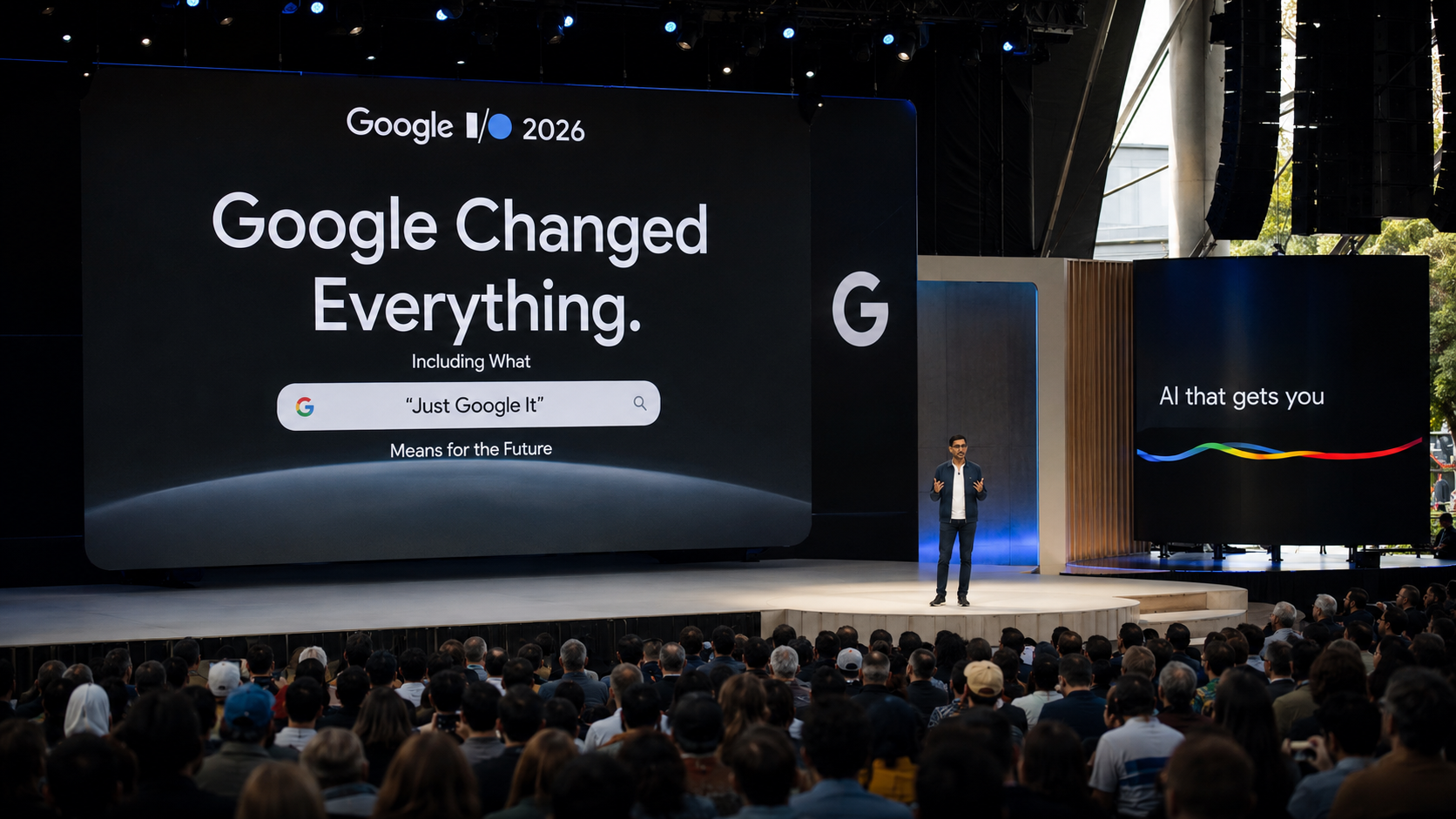

The phrase that defined 25 years of the internet died quietly at Google I/O 2026. Here’s what killed it, and what marketers need to do next.
Your parents said it. Your colleagues said it. You said it a hundred times this week without thinking.
“Just Google It”
For a quarter century, that phrase was how humanity settled arguments, found restaurants, chose hospitals, bought cars, and navigated the world. Type words. Get links. Click. Done.
That behaviour is over. Not declining. Not shifting. Over.
On May 20, 2026, Google held its annual I/O developer conference and announced what it called the biggest upgrade to search in 25 years. That description was accurate, in the same way “some turbulence” describes a plane losing an engine.
What Google actually announced was the replacement of its own search engine.
GOOGLE I/O 2026 What Google Actually Announced
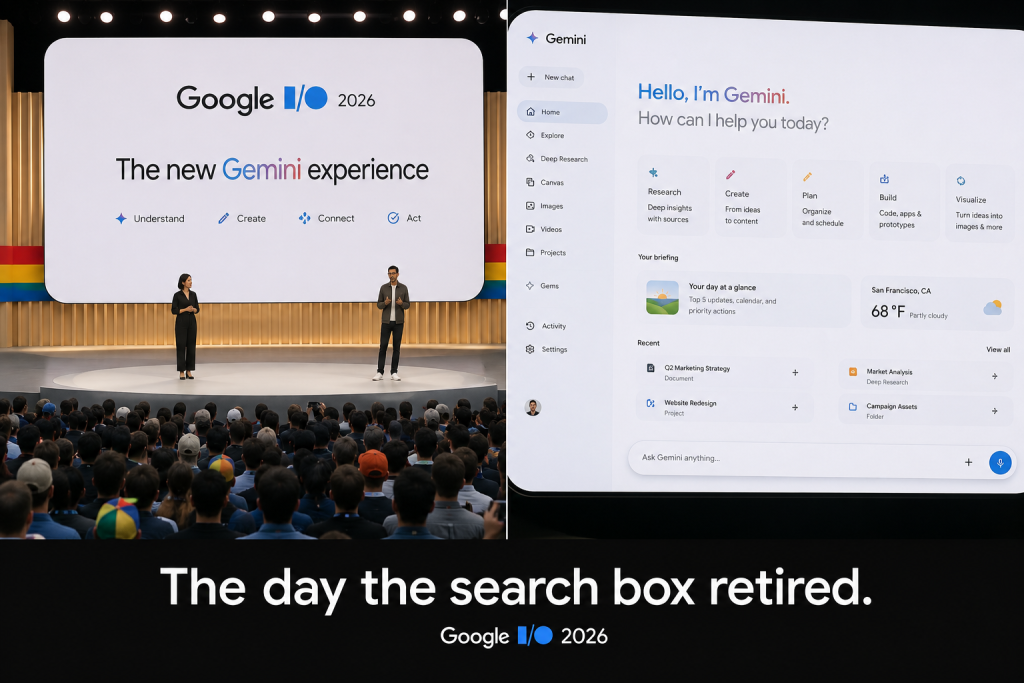
The headlines focused on new model names, Gemini 3.5 Flash, Gemini Omni, Gemini Spark. But those are features. The shift underneath is structural.
Google didn’t upgrade search. It deprecated it.
The traditional search box, the one that produced a ranked list of ten links, has been replaced by a conversational AI interface that synthesizes answers, executes tasks, and increasingly, doesn’t need to send you anywhere at all.
| What Launched | What It Actually Does |
| Gemini 3.5 Flash | Default model powering Search, Gemini app, and AI coding tools. Fast, multimodal, context-aware. |
| Gemini Omni | Processes and generates across any input: text, image, audio, video. The end of text-only search. |
| Gemini Spark | A 24/7 personal AI agent. Books, monitors, writes, executes purchases. Operates on your behalf. |
| AI Mode in Search | Conversational interface is now default. Users upload files, share screenshots, reference open browser tabs. |
| Ask Maps | Local search answers questions, not just shows pins. Synthesized recommendations, not lists. |
| Ask YouTube | Extracts and summarizes content from inside videos. AI watches so you don’t have to. |
| Project Aura | Smart glasses with neural voice tech. Search without a screen. Search without typing. |
Individually, each of these is interesting. Together, they describe a search ecosystem that no longer needs you to click on anything.
THE TEN BLUE LINKS
A Quarter Century. Gone.
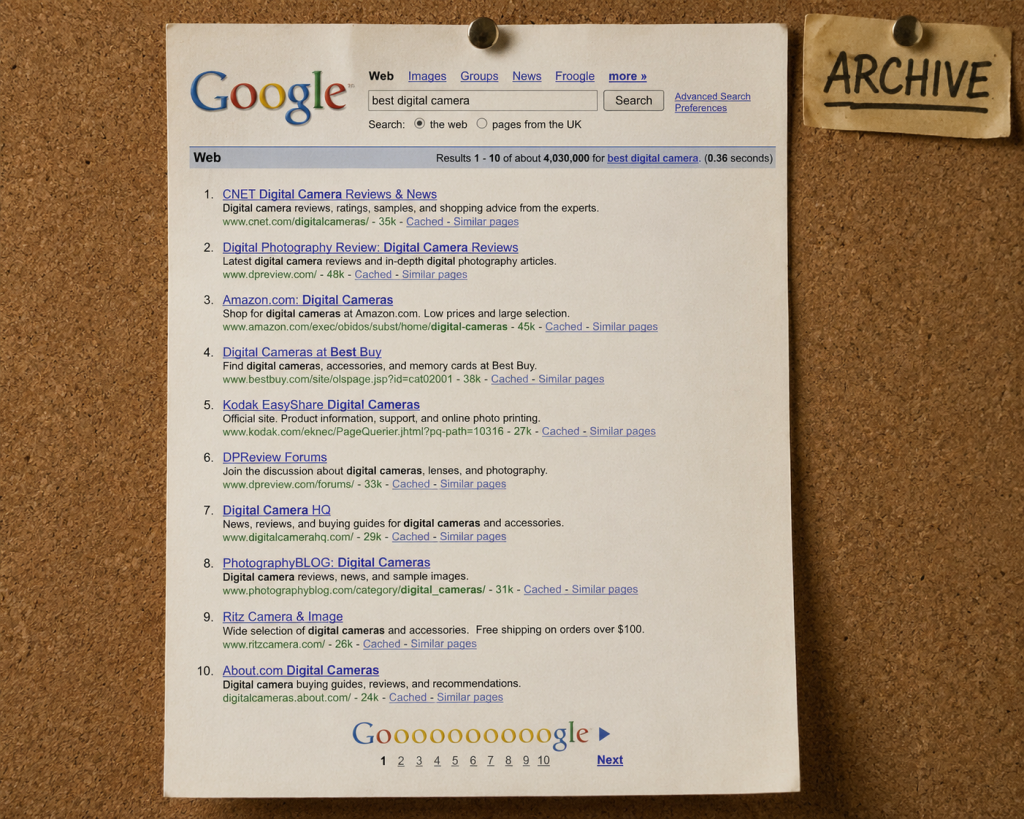
The ten blue links weren’t just a design choice. They were an entire economic system.
Publishers built businesses on them. Agencies built practices around them. Entire careers were devoted to understanding the ranking algorithm well enough to show up in position one.
That system ran on a simple premise: Google finds the answer. You provide it. The user travels to you. The new system runs on a different premise: Google is the answer. The user doesn’t travel anywhere.
| Search Environment | Zero-Click Rate |
| Standard Google Search (2026) | 64.82% |
| Mobile Google Search | 77.2% |
| Google AI Mode | 88% |
| ChatGPT Search | 82% |
| Perplexity | 93% |
Nearly two-thirds of all Google searches now end without a single click. On AI-native platforms, it’s closer to nine in ten.
| When an AI Overview appears, position one CTR drops from 31.7% to 19.8%. That’s not a dip. That’s a structural reallocation of attention, from your website to Google’s interface. |
For brands and marketers, this means the visit-based model of digital marketing is no longer the primary model. You can rank first and still be largely invisible.
ASK YOUTUBE
YouTube Changed Too, and how
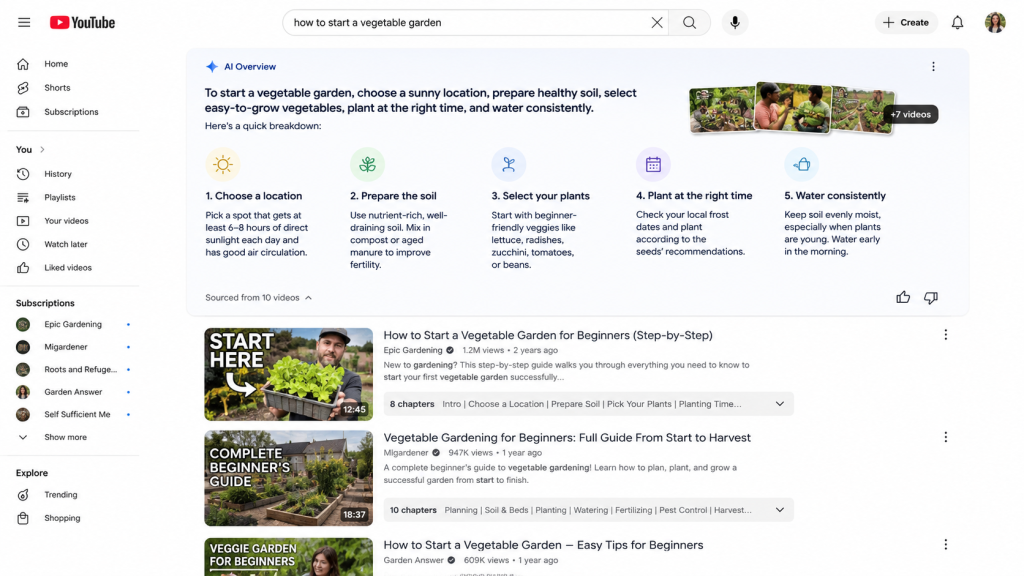
For years, YouTube was the world’s second-largest search engine. Brands invested heavily in video content because YouTube search drove discovery. People typed queries. Videos ranked. Views happened.
Ask YouTube changes the transaction.
Now, when someone searches “how do I fix a leaking pipe,” they don’t get a ranked list of plumbing tutorials. They get a synthesized answer, pulled from across multiple videos, delivered as text, with timestamps if they want to go deeper.
The video still has to exist. But the view might not happen.
| The creators and brands that win Ask YouTube will be the ones whose videos are clear, structured, factually precise, and easy for an AI to extract. Dense, meandering content gets skipped. Not by the viewer. By the AI. |
For brands that built YouTube strategies around search-driven views, this is a significant recalculation. The metric shifts from view count to source authority. The question isn’t whether your video gets watched, it’s whether it becomes the underlying data the AI trusts.
PERSONALISATION
Search Is Now Personal. Uncomfortably So.
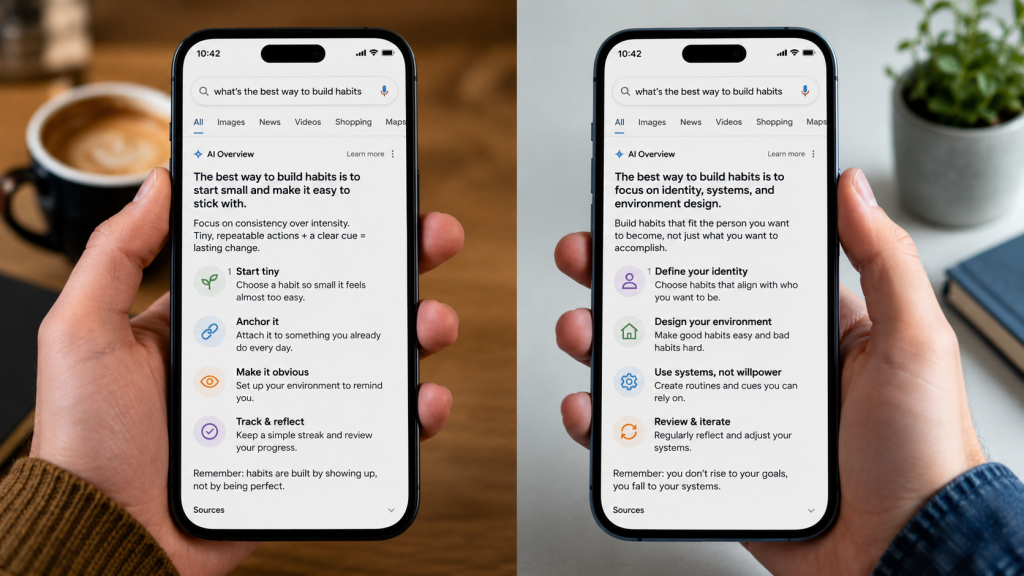
There’s another change from I/O that marketers are underestimating: the end of the universal SERP. When you Googled something in 2019, you got roughly the same results as everyone else typing the same words. That’s how SEO worked, you optimized for a query and reached everyone who searched it.
The 2026 search architecture doesn’t work that way.
Gemini powered search now synthesizes answers based on your Gmail context, your search history, your location, your documented preferences, and your calculated purchase intent, in real time, for every query.
Two people typing the same question get different answers.
| What Gemini Now Reads | Why It Matters for Brands |
| Gmail context | Queries about purchases get answers shaped by your email history |
| Search history | Past behaviour influences what’s recommended now |
| Location | Hyper-local results that change by the block |
| Purchase intent signals | High-intent users see different answers than browsers |
| Documented preferences | Repeat behaviour builds a personal model Google acts on |
For brands, this creates a fundamental problem with keyword-based thinking. There’s no single result to optimise for anymore. Your visibility depends on whether Google’s model of your brand matches what users are actually looking for, across thousands of different personal contexts.
This is why entity authority now matters more than keyword density. Google doesn’t just retrieve pages. It builds models of brands. A weak or inconsistent brand model gets routed around, regardless of domain authority.
GEMINI SPARK
The End of the Purchase Journey
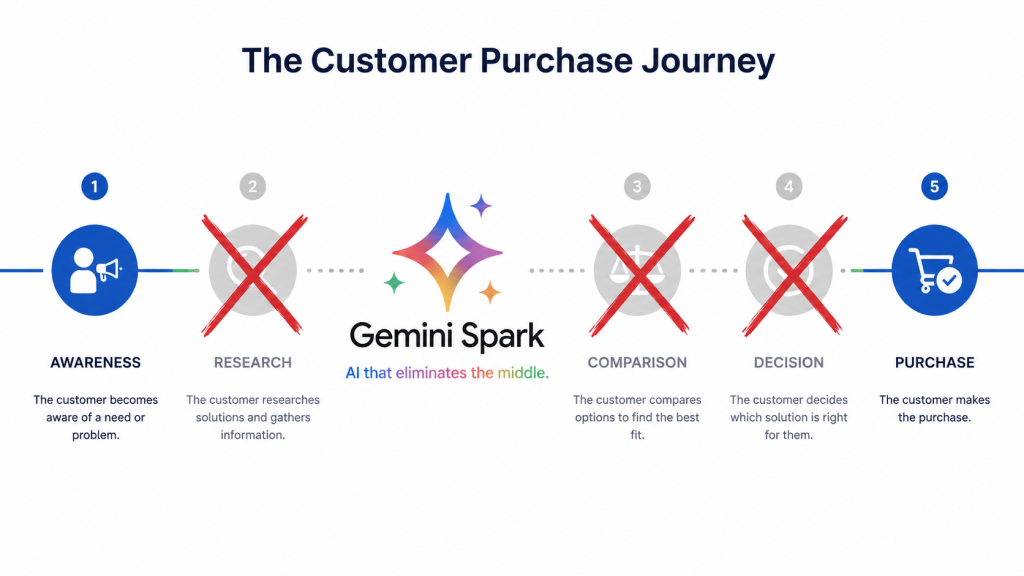
Spark is a personal AI agent that operates continuously on your behalf. It monitors accounts, writes emails, books services, and, most significantly for brands, executes purchases.
The user sets parameters. The agent acts.
What this means for commerce is stark: the middle of the purchase funnel is being automated away.
| A consumer used to research. They’d open tabs, read reviews, compare specs, check delivery times. That research journey was the entire arena in which brands competed for attention. Spark compresses that journey to near-zero. |
The consumer says “find me the best noise cancelling headphones under ₹15,000 that ship in two days.” Spark queries inventory, parses reviews, checks delivery windows, and surfaces one or two options. Possibly executes the transaction.
The brands that appear in Spark’s consideration set aren’t the ones with the best ad creative. They’re the ones whose product data is machine-readable, complete, and accessible via API.
A beautiful product page that humans love but an AI can’t parse is invisible to Spark.
PROJECT AURA
Search Without a Screen
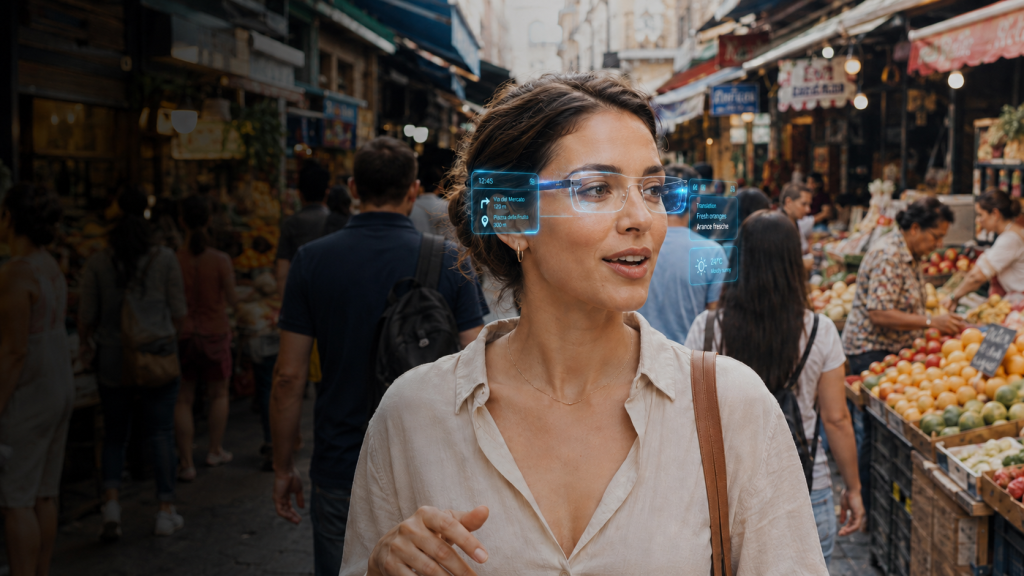
Project Aura, Google’s smart glasses powered by Neural Expressive voice technology, points to where this all ends up.
Search without typing. Search without looking at a screen. Search as a running background process in your daily life.
Ask a question out loud. Get an answer in your ear. Keep walking.
For brands, this is the logical endpoint of everything I/O 2026 announced. If search becomes ambient and screenless, the click becomes even less relevant. Visibility becomes entirely about whether the AI chooses to mention you, verbally, in passing, as the answer.
| The brand that gets spoken as the answer wins. The brand that gets skipped over doesn’t even know it happened. |
FOR MARKETERS
What This Means for Brands
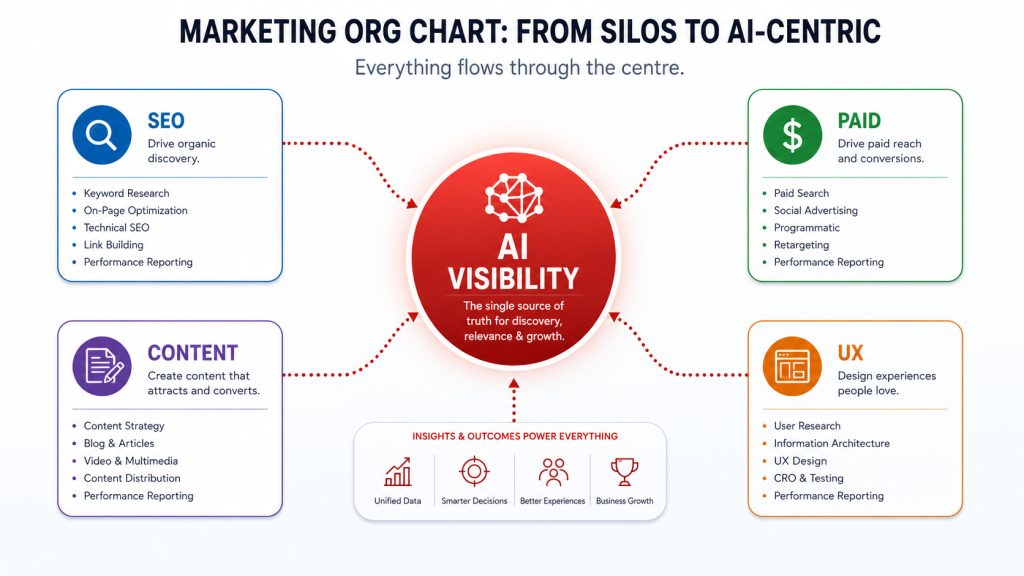
None of this means marketing is broken. It means the rules changed.
The brands that will survive this transition are the ones that stop optimising for ranking and start optimising for citation.
The question is no longer “where do we rank for this keyword?” It’s “do AI systems trust us enough to include us in their answer?”
| What AI Systems Evaluate | What That Means Practically |
| Entity consistency | Your brand described the same way everywhere online |
| Verifiable claims | Stats, citations, named experts — not marketing language |
| Original data | Research or findings nobody else has — AI has to cite you |
| Structured information | Schema markup, llms.txt, clean API access for agents |
| Multi-surface presence | YouTube, LinkedIn, Reddit, publications — not just your website |
The companies that will win aren’t the ones with the most content. They’re the ones whose expertise AI systems can extract, verify, and confidently cite.
The new mandate isn’t to rank. It’s to be undeniable.
One More Thing Worth Sitting With
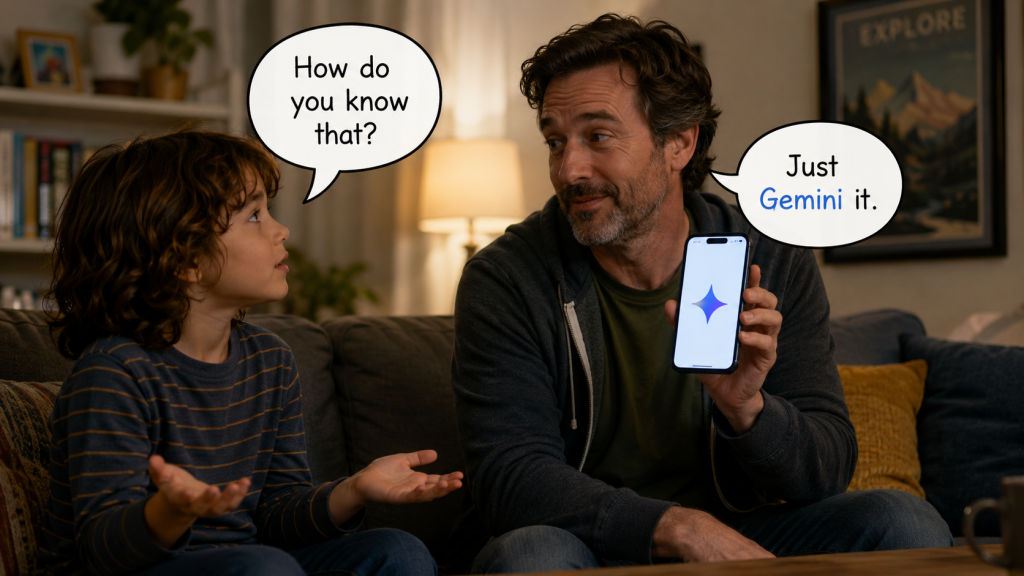
“Just Google it” worked as a phrase because Google was a utility. Neutral. Predictable. You gave it words, it gave you links, you decided.
The new system isn’t neutral. It synthesises. It interprets. It recommends. It acts.
That’s more powerful, and it asks more of the brands that want to be part of what it recommends.
The interface changed. The algorithm changed. The behaviour changed.
The brands that treat this as a tweak to their SEO checklist will find out too late that the game itself changed.
The ones that understand they’re now competing to be trusted by machines, not just found by humans, have a real window right now, before everyone else catches up