
Executive Summary
The luxury eCommerce landscape has fundamentally shifted in the past 24 months. Legacy brands like Louis Vuitton and Gucci are hamstrung by monolithic platforms and expensive SaaS sprawl, while a new generation of agile luxury startups can leverage composable architecture, unified data strategies, and agentic AI to operate faster and more intelligently. This blueprint outlines how a hypothetical luxury house “AURUM” could launch today with radical technological advantages: MACH based infrastructure for rapid experimentation, Google’s ecosystem as a unified commerce layer, AI agents replacing manual merchandising workflows, and generative clienteling that scales the high-touch boutique experience. The result is an “agility arbitrage” that allows new entrants to outmaneuver billion-dollar conglomerates burdened by technical debt.
The era of “lazy luxury” digital strategy is over.
Beautiful product photography on a Shopify template won’t drive sales anymore, the market is saturated, customer acquisition costs have skyrocketed, and luxury consumers expect experiences that traditional platforms simply can’t deliver.
If I were launching a luxury fashion brand today, I wouldn’t start by hiring merchandising teams or signing multi-year enterprise software contracts. I’d build for velocity and intelligence, leveraging technological inflection points that are currently terrifying legacy players.
Here’s the blueprint for a modern, agile luxury house—and why LVMH should be looking over its shoulder.
Foundation: Composable Architecture Over Monolithic Platforms
Legacy luxury brands face a critical weakness: technical debt. Many are locked into massive, monolithic commerce platforms where front-end experiences are welded to back-end databases. Changing a checkout flow can require six months and a dozen consultants.
The MACH Strategy
AURUM would launch with a composable, API-first stack from day one, Microservices, API-first, Cloud-native, Headless.
Core components:
- Front-end: Lightning-fast, React-based interface optimized for visual storytelling, completely decoupled from transaction systems
- Commerce engine: Headless backend like commercetools handling transactions independently
- PIM: Dedicated product information management for complex luxury data—sustainability certifications, artisan details, intricate sizing
The luxury advantage: Composable architecture enables experimentation. Test a new 3D virtual try-on partner without risking checkout stability. Launch seasonal campaigns in hours, not months. It’s agility insurance for brands where experience is everything.
Data Strategy: Google’s Ecosystem as Unified Commerce Layer
Luxury customers don’t see channels, they see the brand. The Instagram inventory must match Google results, which must align with what boutique stylists see on their iPads. Data silos plague legacy luxury. Warehouses don’t communicate with stores; eCommerce sites operate independently from marketing platforms.
The Unified Commerce Imperative
Center data strategy around unified real-time visibility using Google’s ecosystem. Feed clean, structured inventory from the composable backend directly into Google Merchant Center Next, tapping into the Google Shopping Graph.
This transcends advertising, it’s about organic discovery. When high net worth individuals search “cashmere unstructured blazer,” AURUM products appear with accurate, real-time availability across channels. Google becomes an extension of the storefront, not just a traffic source.
Operations: The “SaaSpocalypse” Opportunity
This represents the most critical competitive advantage for 2026 founders.
Traditional eCommerce required dozens of fragmented SaaS tools, separate platforms for returns, reviews, loyalty, image optimization. The “glue” connecting these tools was human labor: merchandisers downloading CSVs, reformatting data, uploading to different systems.
The recent SaaS market crash, the “SaaSpocalypse,” was triggered by recognition that agentic AI can eliminate that human glue.
Lean Team, Heavy Compute
Skip the army of junior merchandisers. Deploy local agentic AI tools to orchestrate workflows across best-of-breed APIs.
Legacy approach (LVMH): Twenty person teams manually processing vendor spreadsheets, resizing images in Photoshop, copy-pasting data into PIMs.
Modern approach (AURUM): AI agents on local servers monitor Dropbox folders. When new assets arrive, they autonomously resize for web, extract specifications, generate SEO optimized product copy in brand voice, and draft products in the commerce engine via API—within minutes.
Experience: Generative AI as Digital Stylist
Luxury demands high touch service. Standard eCommerce personalization “customers who bought this also bought that,” feels algorithmic and cheap, degrading the luxury experience.
Generative Clienteling at Scale
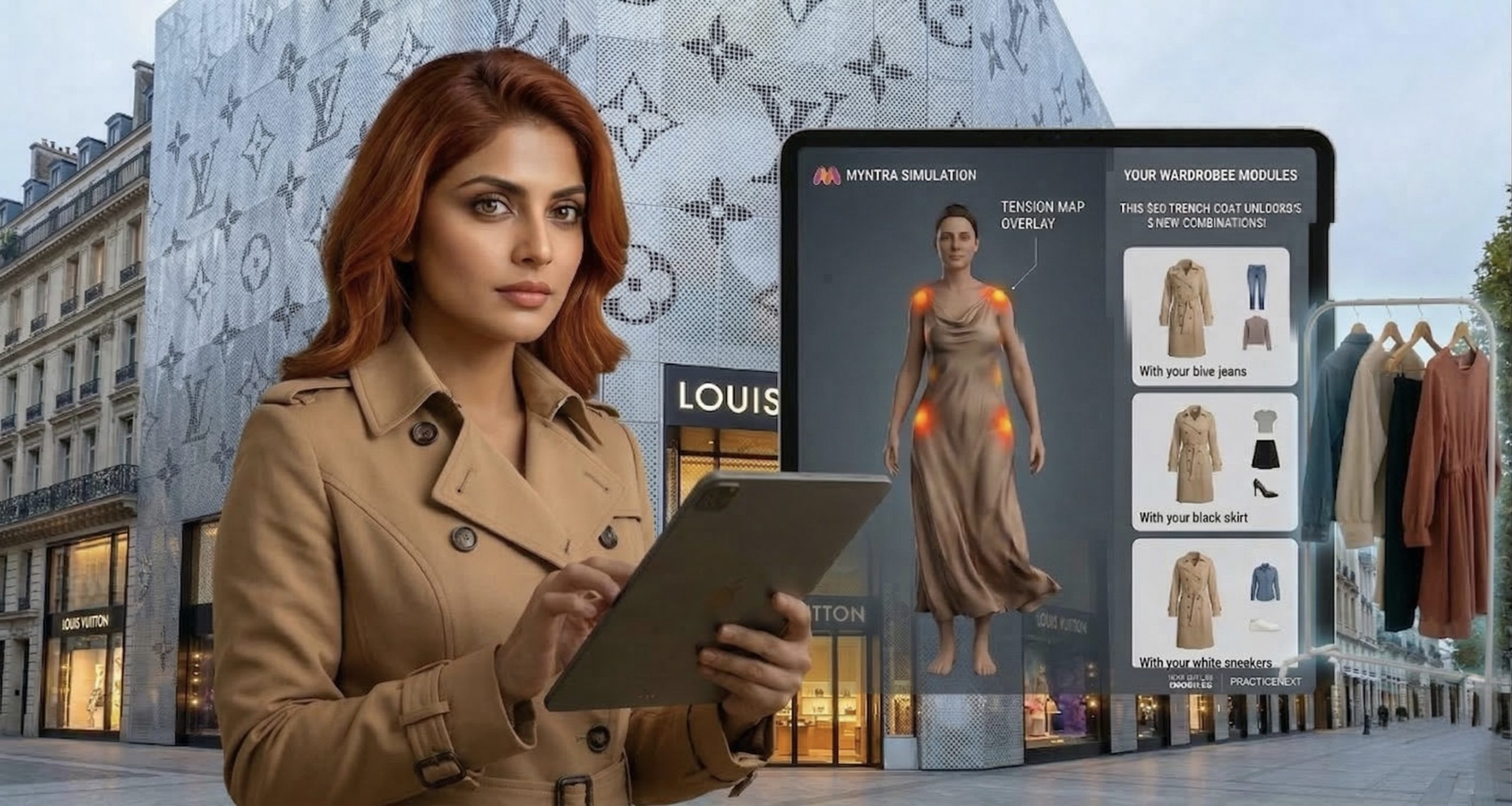
Train generative AI models specifically on catalog and brand aesthetics to deliver personalized styling that rivals boutique service.
When a VIP client purchases a silk skirt, the system doesn’t send generic “New Arrivals” grids. The AI generates a personalized lookbook featuring complementary tops for that specific skirt, potentially creating imagery of complete outfits.
This shifts personalization from filtering to creation, mimicking the boutique stylist who knows your wardrobe, scaled infinitely online.
Real-World Scenarios: Agility in Action
Scenario 1: The 48-Hour Capsule Drop
Context: Secure limited artisanal Tuscan leather; launch capsule collection to capitalize on trending demand.
- Legacy brand: Impossible. Weekly PIM cycles, booked photography studios, two week front-end development timelines.
- AURUM: Shoot raw photos. AI agent retouches to brand standards and drafts product data. Composable front-end allows no-code immersive page creation. Launch in 24 hours.
Scenario 2: VIP Service Recovery
Context: Top-tier customer returns made-to-order item due to slight color variance.
- Legacy brand: Customer emails support. Agent navigates three separate systems (CRM, order management, helpdesk). Management escalation required for non standard returns. Three day resolution frustrates client.
- AURUM: AI agent monitors VIP inbox, recognizes client status and sentiment. Cross references order, pre approves exception based on lifetime value, generates white glove return label, drafts personalized founder apology for review. Total time: 10 minutes.
The Agility Arbitrage
Today’s luxury startup founder’s primary asset isn’t just brand heritage or designer talent, it’s technological agility.
LVMH and Kering command immense resources, but they’re steering aircraft carriers. Legacy systems, expensive fragmented SaaS contracts, and armies of people managing middleware create inertia.
New entrants can build speedboats. By embracing composable architecture, unifying data through platforms like Google, and replacing manual workflows with agentic AI, emerging luxury brands can operate faster, smarter, and with personalization levels that giants cannot match.
The luxury fashion industry stands at an inflection point. The question isn’t whether AI and composable commerce will reshape the sector, it’s which brands will adapt fast enough to survive.