
Prepared for Chief Marketing Officers by PracticeNext Digital Strategy Group
EXECUTIVE SUMMARY
The digital front door has moved. Consumers no longer begin their purchase journey on a search results page, they ask an AI. That AI synthesises, ranks, and recommends your brand before a single human has touched your website. For CMOs, this is the defining shift of the decade.
The five things you need to act on today:
- AI has become your primary brand gatekeeper. Generative AI models are no longer just directing traffic, they are writing your brand narrative, deciding your competitive positioning, and determining whether you are cited or ignored. Winning in search is no longer enough.
- Commoditisation is the new existential threat. When an AI distils your product to price, specs, and aggregate reviews, premium positioning evaporates. The brands that survive are those that have built emotional equity so strong that no algorithm can flatten it.
- Visual perfection is dead as a differentiator. Every startup now generates pixel perfect imagery. The 2026 consumer has developed Generative Blindness, an instinctive distrust of AI-polished aesthetics. Opinionated, human-led design systems are the antidote.
- Your website is the final moment of truth. When an AI recommendation lands a user on your digital storefront, they arrive with high intent and zero patience. A slow, generic, or disconnected experience destroys the trust the AI just built.
The strategic response is a unified operating model that is driven by emotion and built on logic, imultaneously structured for AI extraction and engineered for human connection.
The Commoditisation Crisis
For two decades, CMOs operated with a reassuring degree of control over the digital customer journey. You bought the media, targeted the demographic, designed the landing page, and owned the narrative. If a consumer searched for your category, the goal was simply to win the click, and from that moment, immerse them in your carefully curated brand world.
That model is structurally broken. In 2026, the digital front door has shifted from the search results page to the Generative AI assistant. For premium brands, this shift has introduced a specific and urgent threat: the Commoditisation Crisis.
Further Reading: If AI is the New Front Door, Most Brands are Not Even on the Street
The AI as Hyper-Rational Middleman
When a consumer asks an AI model for a product recommendation, the AI operates as an impartial, hyper rational intermediary. It does not register your award winning brand campaign. It does not respond to the carefully curated aesthetic of your homepage. The algorithm strips away the narrative and reduces your product to its barest logical components: price point, technical specifications, and aggregate review sentiment.
| If your brand strategy relies entirely on being discovered through traditional search, you are no longer building a brand. You are managing a utility. |
The AI neutralises the emotional premium that historically justified higher prices. The very differentiation that your marketing budget has been building for years, the story, the aspiration, the cultural resonance simply does not register at the algorithmic discovery layer.
Brand Equity as the Last Competitive Moat
When an AI presents a user with three equally logical options, the purchase decision still happens in the human mind. And in that final moment of selection, the decision driver is Brand Equity: which brand aligns with my identity, my values, my sense of self?
The brands that are winning in 2026 have accepted a non negotiable dual mandate:
- The Logic Layer must be flawless. Product data structured through pristine Schema markup, Answer Engine Optimisation (AEO), and Generative Engine Optimisation (GEO) ensures the AI has no reason to ignore you.
- The Emotion Layer must be irreplaceable. Once the AI passes the user to your digital storefront, the experience must immediately shift from machine-logic to human-emotion — narrative, visual identity, and interaction design that no competitor can replicate with a prompt.
E-E-A-T: The Architecture of Authenticity
Google’s E-E-A-T framework: Experience, Expertise, Authoritativeness, Trustworthiness, has become the practical blueprint for anti commoditisation strategy. Because Large Language Models lack lived human experience, authentic human testimony has become the rarest and most valuable signal on the web.
For CMOs, this means investing in three specific areas:
- Real humans using products in real contexts, documented as credible, verifiable content — not styled brand photography, but evidence.
- Credentialed subject-matter experts anchoring your brand’s claims with identifiable authority.
- Digital ecosystems that demonstrate genuine understanding of customer friction points, not polished marketing copy that talks past them.
You cannot out compute the algorithm. You can out human it. That is the strategic opportunity of 2026.
The Sea of Generative Sameness
When any brand, regardless of budget or category maturity, can instantly generate pixel perfect, hyper realistic imagery, visual polish is no longer a differentiator. It is simply the baseline.
Generative Blindness: The Consumer’s New Defence
The convergence of AI-generated aesthetics has produced a predictable consumer response. Because leading image models share foundational training, they naturally converge on a similar visual language: hyper saturated colours, implausibly smooth textures, and an uncanny, frictionless quality that designers have come to call the AI Gloss.
The 2026 consumer has developed what researchers are calling Generative Blindness, an intuitive aversion to this aesthetic. When users encounter a digital storefront populated entirely with AI-polished imagery, a cognitive defence mechanism activates. The visuals signal inauthenticity before a single word is read. Trust erodes before consideration begins.
Opinionated Design: The Strategic Response
The antidote is not rejecting AI-assisted design, it is radically constraining it. The brands building durable visual equity in 2026 are those that have developed relentlessly strict, opinionated design systems, then embedded those constraints directly into their AI generation pipelines.

Consider how a modern digital brand establishes a consistent visual narrative. Instead of relying on generic prompts, the design system mandates unyielding constraints.
A brand might engineer a proprietary, recurring virtual ambassador, let’s call her Saara ,A PracticeNext Implementation, in the previous post, it was just Saara, in this post she has a friend. The system anchors her with hyper specific aesthetic rules: realistic, cinematic human elements, distinct Indian features with a fair skin tone, and styled exclusively in contemporary western outfits. The story will evolve as we go.
By aggressively enforcing these highly specific parameters across thousands of touchpoints, the brand overrides the AI’s tendency to generalize, transforming machine output into a cohesive human narrative.
Distinctive brands do not prompt AI freely and curate the best output. They build such specific rules that the AI has no room to generalise.
Kinetic Identity: Brand as Living System
Static visual identity, a logo, a colour palette, a type system, was designed for an era of broadcast media. In an environment where AI enables real-time synthesis and personalisation, brand identity must become kinetic: a living system that responds to the user in the moment.
Trust is built not in brand campaigns but in micro interactions. The way a button responds to a touch. The way an interface shifts tone, from data dense to emotionally warm, the moment a user transitions from research intent to purchase intent. These micro signals are the new brand language. CMOs who invest in defining them will build the kind of instinctive affinity that no competitor can purchase.
Further Reading: How Motion Design Increases Conversions by 20%
UI/UX as Your Ultimate Brand Ambassador
When a user arrives at your digital flagship via an AI citation, the context is fundamentally different from a traditional search click. The AI has already performed the work of discovery, comparison, and shortlisting. The user is not browsing, they are validating. They arrive with focused intent and, critically, with zero patience for friction.
This changes the strategic function of your UI/UX entirely. The digital experience is no longer a marketing surface. It is the closing argument.
The Cost of Cognitive Dissonance
If a user receives a confident AI recommendation, ‘Brand X is the leading solution for your need’ and then lands on a slow, fragmented, or visually incoherent website, the result is immediate cognitive dissonance. The experience contradicts the promise. The trust built by the AI recommendation is instantly destroyed, and the user bounces, not because your product failed, but because your digital experience did.
For CMOs, this represents a category of brand damage that is both measurable and preventable.
Two Layers That Must Work in Concert
The Invisible Foundation (Logic)
The technical infrastructure of your digital experience must be transparent to the user. This means composable commerce architecture for near zero load latency, contextual landing ecosystems that dynamically reflect the specific AI prompt that originated the visit, and a site-native natural language search function that mirrors the conversational logic of the AI the user just left.
The Emotional Payload (Emotion)
Once the user is inside your digital flagship, the experience must deliver on the brand promise with immediacy. Kinetic typography that communicates with energy. Seamless 3D product interactions that eliminate the uncertainty of remote purchase. An interface tone that shifts from informational to aspirational as the user moves from research to intent. The era of the passive corporate portal is over. Your website must feel like a responsive, listening presence.
The question is no longer whether your website is beautiful. The question is whether it immediately validates the trust an AI just placed in your brand.
Further Reading: UI/UX Design for Digital Commerce: From Interface to Intellect
The AI-Native Digital Growth System
The greatest structural vulnerability for enterprise brands in 2026 is not a technology gap, it is an organisational one. In most large organisations, SEO and technical teams are chasing AI citations in one silo while brand and creative teams are building emotional narratives in another. The consumer experiences this fracture at the single most consequential moment: the hand off from AI recommendation to brand destination.
Closing this gap requires more than better coordination. It requires a unified operating model — a single system in which algorithmic performance and emotional resonance are engineered as one.
The Three Pillars
The AI-Native Digital Growth System operates on a single, non negotiable philosophy: digital presences must be driven by emotion and built on logic. It achieves this through three integrated layers that must function as a single coherent system, not as sequential handoffs.
| The Emotion Layer Brand Positioning | The Experience Layer UI / UX Design | The Logic Layer Data Ecosystem |
| Architecting the deeply human centric narrative, opinionated design language, and strict brand constraints that algorithms cannot commoditise. | Leveraging AI to create frictionless, hyper personalised user experiences that transform the digital storefront into an adaptive, anticipatory destination. | Pristine PIM, AEO-compliant content architecture, and dynamic schema markup structured so precisely that LLMs confidently cite your brand as the definitive answer. |
When these three layers operate as an integrated system rather than separate workstreams, the result is a digital presence that educates the machine and humanises the destination it leads to. Strategy, branding, and technology are no longer sequential, they are simultaneous.
Further Reading: AI-native Digital Growth System: The Unified Operating System for Digital Commerce
Proof of Performance
Recognising the shift from search to synthesis is one thing. Measuring it is another. The following case studies illustrate what happens when the Emotion-Logic framework is deployed as a unified system across B2C, B2B, luxury, and enterprise contexts.
| Netpeak USA eCommerce; AI Traffic & Revenue Growth |

Netpeak USA faced a common and accelerating problem: traditional search traffic was flatlining while AI-referred traffic was growing but failing to convert. Their product inventory was structured for keyword search, not for the conversational queries that AI assistants generate. Post-click, the site experience was not designed to validate an AI recommendation.
The intervention rebuilt the entire product architecture around conversational AI intent, pristine Product Information Management (PIM) and Schema markup (Logic), while simultaneously overhauling the site UI to feature hyper-specific visual proof and kinetic micro-interactions (Emotion).
AI-Referred Traffic +693% in 4 months I AI-Driven Revenue +120% in 4 months
The 5% conversion rate on AI-referred traffic — vastly outperforming the organic search baseline — confirmed that a frictionless post-click experience is not a nice to have. It is the multiplier on every AI citation your brand earns.
| Kick Game Luxury Streetwear & Footwear , A PracticeNext Implementation |
Hype culture makes two simultaneous demands that are difficult to reconcile: the emotional weight of exclusivity and the ruthless operational precision of real-time inventory accuracy. A rare sneaker recommendation from an AI is worthless if the click through leads to a product that is out of stock or a checkout that fails.
PracticeNext deployed a headless commerce architecture with real-time PIM synced directly to Answer Engines, ensuring AI citations reflected live inventory (Logic). Post click, the digital storefront was reimagined as a kinetic, high octane experience that translated the physical energy of a sneaker drop into the digital space (Emotion).
Mobile Conversion Rate +48% from AI traffic I Citation Share Top-ranked for high-intent queries
| Rootly IT Services & Incident Management SaaS |
Operating in a highly competitive software category, Rootly faced a familiar challenge: their technical capabilities were strong, but their content architecture was built for keyword search, not for the conversational, intent-led queries that AI assistants process. Their demo request flow was also a conversion bottleneck for the enterprise buyers AI was sending them.
Rootly abandoned keyword-density content strategies and adopted a prompt-led architecture, structuring technical documentation so Answer Engines could parse their integration capabilities with confidence (Logic). Post-click, the static demo request form was replaced with a deeply conversational, frictionless product-tour interface (Emotion).
AI Citation Rate 10x increase I Brand Mentions +126% on non-branded prompts
| FusionCX Global B2B Customer Experience Solutions, A PracticeNext Implementation |

In enterprise B2B, the AI evaluates service providers with clinical detachment, technical capabilities, compliance credentials, global delivery scale. FusionCX had the substance but lacked the structured data architecture that would allow AI models to confidently surface them. Their website, built around text-heavy B2B conventions, also failed to translate their global operational expertise into a human, compelling narrative.
PracticeNext restructured FusionCX’s digital footprint using Generative Engine Optimisation (GEO) with AEO optimised pillar pages (Logic).
The destination UI was redesigned around a dynamic, conversational interface that humanised their global operations for enterprise decision makers (Emotion).
AI-Referred SQLs +54% increase I Enterprise Sales Cycle Significantly reduced
| L’Oréal CPG & Lifestyle Beauty |
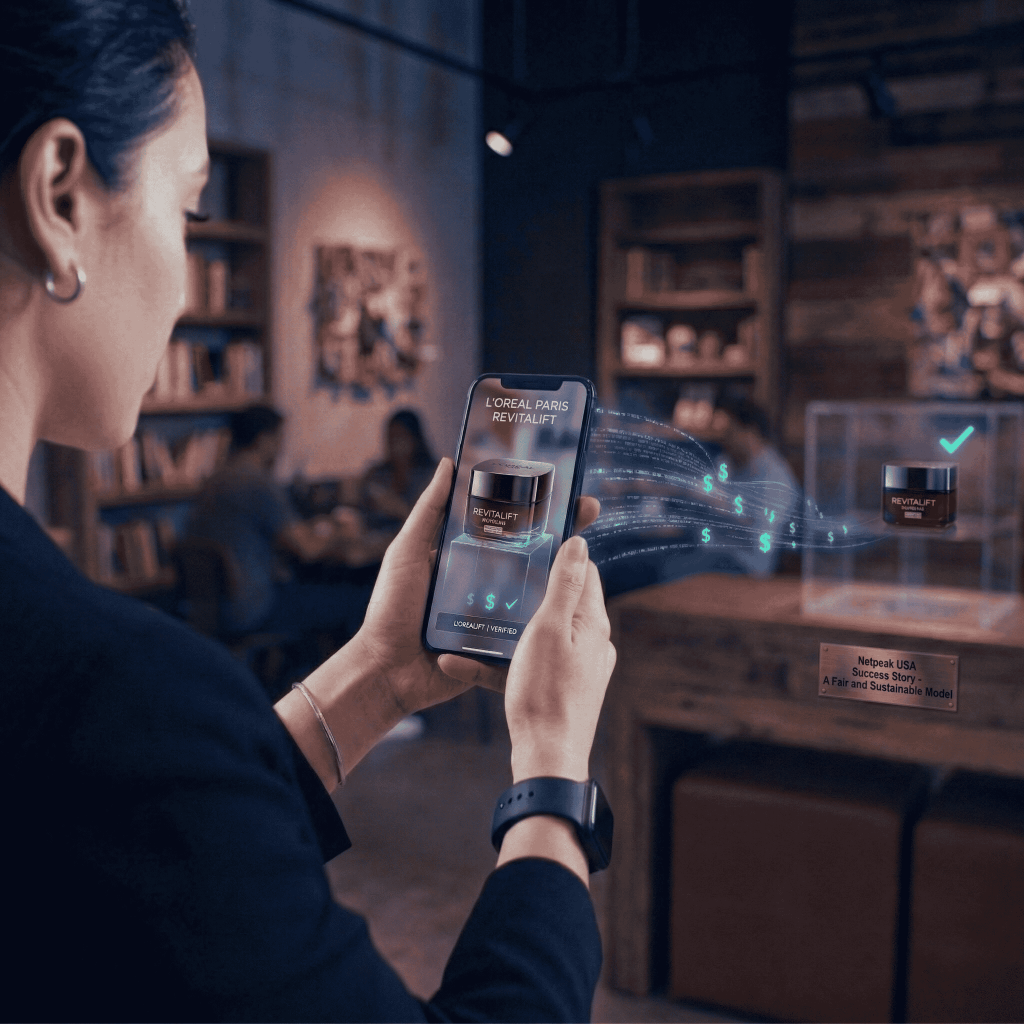
As AI beauty assistants became the default discovery layer for skincare consumers, L’Oréal faced a strategic inflection point. Their decades of dermatological research represented a significant authority advantage, however only if structured in a way that AI models could extract and cite with confidence.
L’Oréal modularised their research into AEO friendly answer blocks, enabling confident AI citation for hyper-specific scientific queries (Logic). The post-click experience was upgraded to offer dynamic, AR-powered skin diagnostics the moment a user landed from an AI referral — immediately delivering the personalisation the AI had implicitly promised (Emotion).
Dwell Time +300% increase I Direct-to-Consumer Sales +45% lift
| The Hillcart Tales Premium D2C Beverage, A PracticeNext Implementation |

Premium tea occupies a category where the AI discovery opportunity is significant but underexploited. Consumers increasingly ask AI assistants for gifting recommendations, rare blends, and origin specific sourcing. The Hillcart Tales had the product provenance to justify premium citation share, but lacked the data architecture for AI models to confidently recommend them.
PracticeNext structured the brand’s intricate sourcing and flavour profile data into AEO-compliant architecture (Logic) and replaced the traditional product catalogue with a kinetic, sensory driven UI, a digital tea boutique that adapted its visual tone based on the specific AI prompt the user originated from (Emotion).
LLM Citation Share 65% for premium tea queries I Average Order Value 2x increase from AI traffic
| Saint-Gobain India Enterprise B2B Manufacturing, A PracticeNext Implementation |

For a global enterprise with a vast technical product catalogue, the challenge was not product quality, it was discoverability. Complex material specifications were buried in legacy CMS structures that AI models could not efficiently parse. Enterprise buyers conducting AI-assisted specification searches were consistently being directed to competitors with better-structured data.
PracticeNext architected a headless portal that modularised complex material data into pristine schema for seamless LLM extraction (Logic). This was paired with an anticipatory UX allowing enterprise buyers to instantly visualise material applications via 3D micro-interactions (Emotion), bypassing the static, legacy B2B interface entirely.
Sales Qualified Leads +40% from Answer Engine citations I Buyer Experience Legacy interface eliminated
The CMO Mandate for the AI Era
The transition from search to synthesis is not a future trend to prepare for. It is the operating reality of 2026. Across every category explored in this paper, from luxury streetwear to enterprise manufacturing, from premium beverages to global B2B services, the pattern is consistent: the brands gaining ground are not those that have out-optimised the algorithm. They are the ones that have educated the machine and humanised the destination it leads to.
For CMOs, the strategic implications are clear and urgent:

Algorithmic citation is now table stakes, not competitive advantage. If your product data is not structured for AI extraction, you are invisible at the point of consideration. But being cited is only the beginning.
The moment of truth has moved. It now occurs not in a campaign, not in a search result, but in the first three seconds after an AI recommendation lands a consumer on your digital experience.
Commoditisation is not a price problem, it is a brand architecture problem. The brands that maintain premium positioning in the AI discovery era are those that have built emotional equity too specific, too human, and too contextual for any algorithm to replicate.
- Fragmentation is fatal. When technical execution and brand storytelling operate in separate organisational silos, the consumer experiences the seam at exactly the wrong moment. The CMO’s role in 2026 is to close that seam.
Digital is no longer a channel. It is the foundation of modern commerce. In 2026, a brand that cannot be found by an AI, or that fails to convert when it is, has a strategic emergency, not a marketing problem.
The AI-Native Digital Growth System is built specifically to resolve this tension, integrating logic and emotion not as sequential stages of a funnel, but as simultaneous, inseparable dimensions of a single brand system. Technology as a catalyst for meaningful human connection and measurable commercial growth.
The era of passive digital discovery is over. The brands that lead the next decade will be driven by emotion, built on logic, and engineered from the outset for the world their consumers are already living in.
| PracticeNext is a AI-First Digital eCommerce Agency We build corporate brand websites and digital flagship stores, that are driven by emotion and built on logic. |