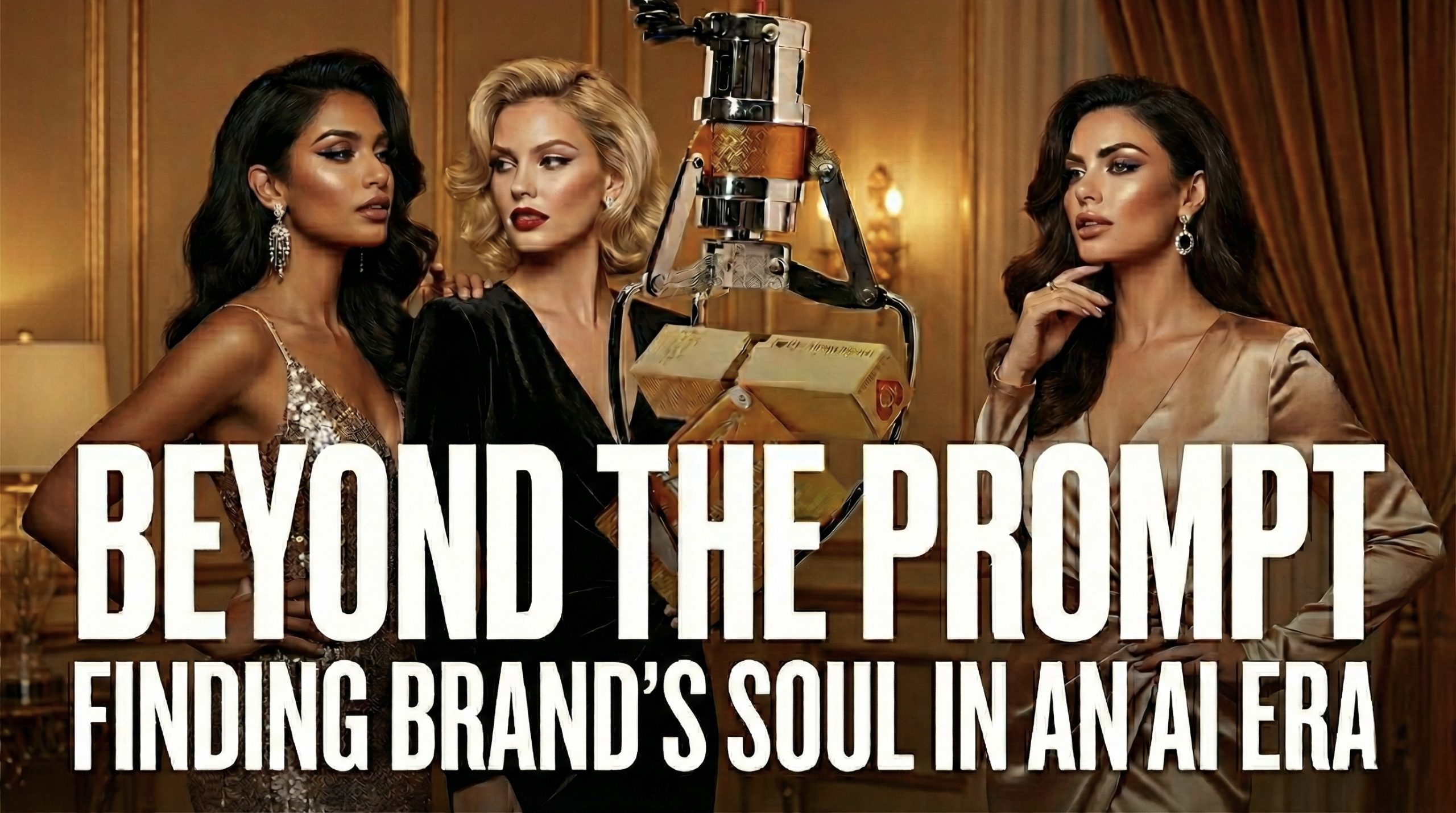

In 2014, I wrote that technology was “subverting the marketing paradigm.” Back then, the disruptors were mobile apps, Big Data, and the rise of social media. The central thesis I proposed remains our North Star even today: “Technology is to enhance the idea; Technology is not the idea.”
However, while that truth holds, the stakes have changed. If software was “eating the world” a decade ago, Artificial Intelligence is now generating it.
In the last decade, we spoke about the need for “digital-native” marketers. Today, the modern marketer must be AI-native. This isn’t just a buzzword; the data validates this seismic shift. According to the State of Marketing Europe 2026 report by McKinsey.
Companies that have aggressively adopted AI maturity are already realizing marketing efficiency gains of 22%, with projections to hit 28% in the next two years. If you are not using AI to automate the “doing,” you cannot compete on speed or cost. But efficiency is not a strategy. It is merely the price of admission.
The Paradox: Why Brand is the New Gold

Here lies the counter intuitive truth of our time. In a world where AI can generate infinite content, personalise millions of messages, and optimise media in real-time, what have marketing leaders identified as their number one priority?
It isn’t AI. It is Branding. According to the same 2026 report, out of 20 critical marketing topics, Branding ranked #1, ahead of data, privacy, and even ROI. GenAI & Agents rank 17.
Why? Because in an era of “constant disruption” and “synthetic media,” trust has become the scarcest resource. As the report notes, “Brand is not a relic but the bedrock of resilience”. When algorithms take over tasks like product comparison and transaction, emotional attachment and authenticity become the only true differentiators left.
The New Dynamic: Agentic AI vs. Human Connection. In 2014, I called the Internet an “engine of convenience.” Today, we are moving toward Agentic AI . Autonomous systems that don’t just target audiences but actively negotiate and personalize experiences for them.
This technology is powerful, but it is cold. It can amplify a message, but it cannot manufacture the soul of the message.
- AI provides the scale: It enables “interactive branding” and “two-way dialogues” at a volume previously impossible.
- Brand provides the safety: As seen with industry leaders like Schneider Electric, in a noisy B2B world, customers are not looking for more specs; they are looking for “who will be there for them in the long run”.

The brands that win won’t just be the ones with the best algorithms; they will be the ones that use AI to clear the clutter, allowing their “Big Idea” their purpose, their craft, and their humanity, to shine through more brightly.
The tools have become infinitely more powerful, but the mandate remains unchanged. We must embrace AI not to replace our identity, but to secure it. The future belongs to those who can wield machines to tell a deeply human story.
Technology is still just the vehicle. Brand is the driver.










Pingback: Intelligent Brand Design: How Smart CMOs Achieve 23% Higher Revenue
Pingback: Why Brands Must Stop Following and Start Leading I PracticeNext