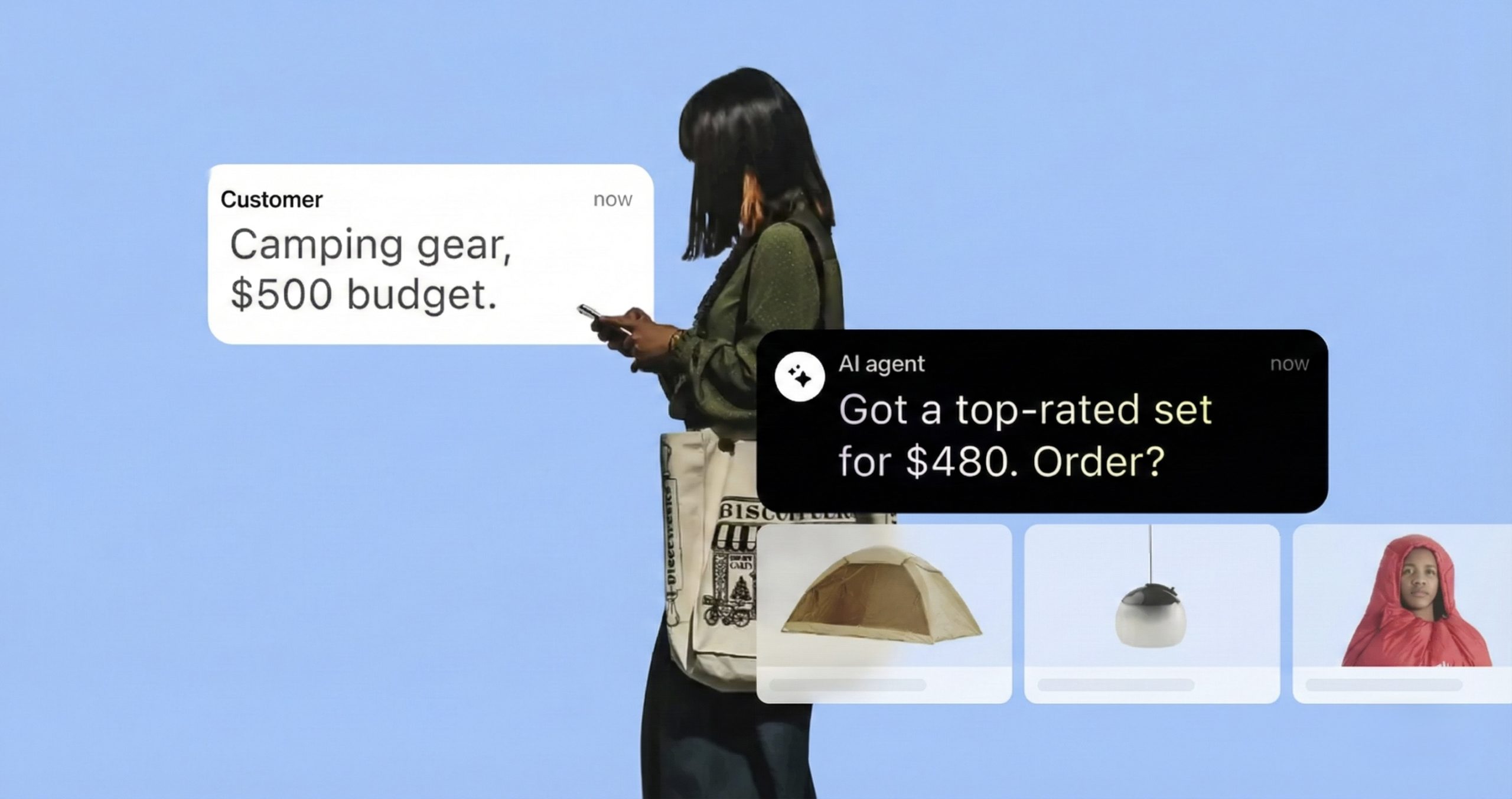

Picture this; You wake up tomorrow morning, and your business has a problem. Not the kind you’re used to solving.
Your website is beautiful. Your SEO is optimised. Your ads are converting. But none of it matters anymore. Because the customer looking at your products right now? It’s not a person. It’s an AI agent. And it doesn’t care about your hero image, your clever copy, or your Instagram perfect lifestyle shots. Welcome to Agentic Commerce
The Game Just Changed; And Most Businesses Don’t Even Know It
For twenty years, we’ve been optimising for humans. We made buttons bigger, checkout faster, product pages prettier. But here’s what happened while we were busy perfecting the human experience: AI agents learned to shop for us. And they don’t shop like we do.
Think about your last online shopping journey. You probably opened twelve tabs, compared prices across five sites, got distracted by a notification, came back an hour later, and finally clicked “buy” after convincing yourself you really needed it.
Now imagine you just say: “I’m moving to a new city next month.” That’s it. That’s the entire instruction. Your AI agent doesn’t open tabs. It doesn’t get distracted. Within seconds, it’s scanning real estate listings, calculating commute times, assessing furniture resale values, listing your old couch on Marketplace, negotiating with moving companies, and booking everything. It creates a complete, cross category solution from six words.
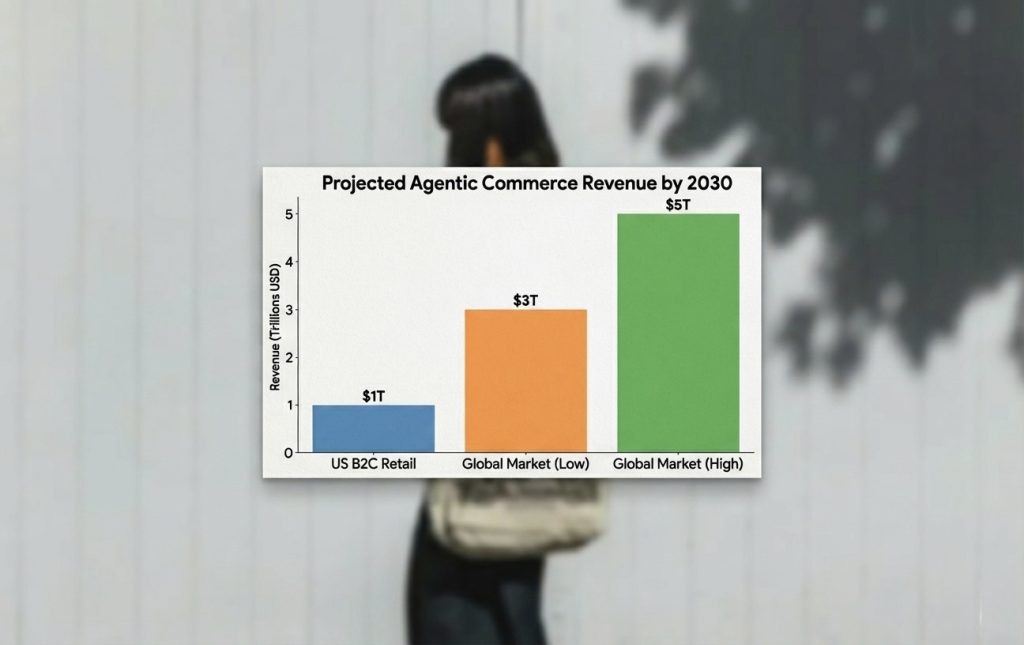
This isn’t coming. This is here. McKinsey’s numbers should terrify you; or excite you, depending on how fast you move. By 2030, we’re looking at $1 trillion in the U.S. alone flowing through these agentic systems. Globally? Between $3 trillion and $5 trillion. That’s not a trend. That’s a tidal wave.
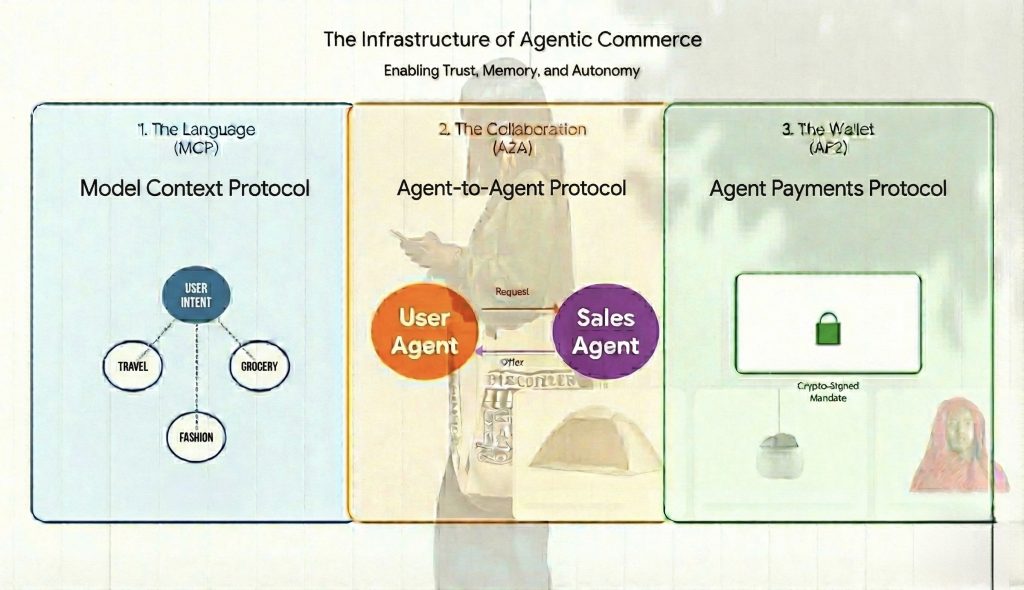
Let me introduce you to the infrastructure that’s rewiring commerce as we speak:
The Language: Model Context Protocol (MCP): Remember how frustrating it is when you have to tell every website your preferences over and over? Agents don’t have that problem anymore. MCP lets them remember everything about you across every platform. If your agent knows you’re vegan when ordering groceries, it applies that same filter when booking restaurants, buying shoes, or planning travel. One preference, infinite applications.
The Wallet: Agent Payments Protocol (AP2): Here’s where it gets wild. Google built a system that lets your agent spend your money, securely, autonomously, without you clicking “confirm purchase” every single time. It uses cryptographic signatures to create an unbreakable audit trail. You can tell your agent, “Always buy this coffee when it drops to $15,” and it just… does it. While you’re sleeping. While you’re in a meeting. While you’re living your life.
Visa and Mastercard aren’t sitting this one out either. They’re building verification systems to make sure the agent spending money is actually authorized by a real human. Because the last thing we need is rogue bots with credit cards.
The Negotiation: Agent-to-Agent (A2A): This is where things get really interesting—and really disruptive. Your personal shopping agent can now negotiate directly with a brand’s sales agent. In real-time. Without you or the merchant lifting a finger.
Want to buy a sofa, rug, and lamp together? Your agent contacts the retailer’s agent and works out a custom bundle discount. Instantly. Using standardised protocols. At scale. Think about that. Every transaction becomes a negotiation. Every price becomes dynamic. Every customer gets a personalised deal.
Three Ways Agents Are Shopping Right Now
Agent-to-Site: Your agent visits websites like you used to, but infinitely faster. It scans, compares, and buys; all while you’re doing literally anything else.
Agent-to-Agent: Two bots negotiating like seasoned hagglers at a bazaar. Except it happens in milliseconds, and the deals are mathematically optimized.
Brokered Agent-to-Site: Middleman agents that specialize in specific tasks. Need a restaurant reservation that fits your schedule and maximizes your points? There’s an agent for that, talking to OpenTable’s agent, working it out for you.
Some Brands are Already Winning
While you’re reading this, some brands are already dominating the agentic future:
Perplexity lets users buy products without ever visiting the merchant’s website. They just… answer your question and complete the purchase. The merchant’s beautiful storefront? Bypassed entirely.
Shopify launched “Agentic Storefronts” because they saw this coming. They’re structuring merchant data so it’s optimized for machines, not just humans. They integrated MCP so agents can build shopping carts across multiple stores seamlessly.
OpenAI released “Operator”—an agent that books your dinner, organizes your trip, and handles multi-step tasks you used to spend an hour completing.
These aren’t experiments. These are live products with real revenue flowing through them.
The Death of SEO, The Birth of AEO
Here’s the hard truth: If an AI agent is making the decision, your brand story doesn’t matter. Your aspirational imagery doesn’t matter. Your emotional appeal doesn’t matter. What matters is Agent Experience Optimization (AEO). Is your product data structured and machine-readable? Can agents access it via APIs? Do you have detailed specs on ingredients, dimensions, compatibility, sustainability?
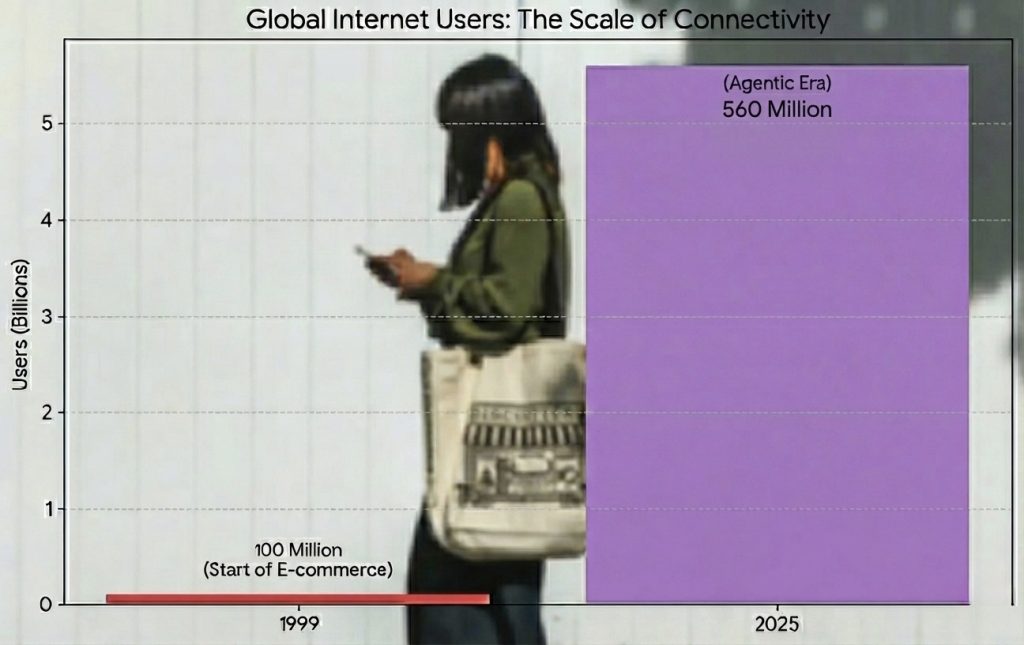
Because if you don’t, you’re invisible to the new generation of customers. But if you adapt, entirely new revenue streams open up. Scale of connectivity is now 5x of now since the eCommerce started influencing consumer behaviour.
The Trust Problem Nobody’s Talking About Enough
Here’s the question that keeps regulators and consumers up at night: If an agent orders 500 pizzas by mistake, who pays?
The industry is racing to answer this with “Know Your Agent” (KYA) protocols. Companies like Skyfire are issuing digital passports for agents, complete with reputation scores and spending limits. But beyond liability, there’s a bigger trust issue: transparency.
Why did your agent choose Brand A over Brand B? Was it actually the best deal? Or did Brand A pay for preferential placement? Consumers need to see the decision trail. The brands that win trust will be those that show their work. That explain their reasoning. That prove they’re optimising for the customer, not themselves.
Your Roadmap for Survival
Six domains where you need to act now, either by building something new (innovate) or fixing what you have
- Product Discovery: Build APIs that let agents pull rich product data without scraping your website like some digital archaeologist.
- Loyalty Programs: Let agents negotiate with your loyalty system. “My user is Gold tier, what’s your best price?”
- Payments: Your fraud detection needs to distinguish between malicious bots and legitimate shopping agents.
- Core Platforms: Your backend must handle high-volume, low-latency requests from machines that don’t get tired or take coffee breaks.
- In-Store Experience: Connect digital agents to physical inventory. Let them guide humans to the exact aisle.
- Fulfillment: Enable agents to negotiate shipping dynamically based on urgency.
The Bottom Line That Should Keep You Up Tonight
The era of the human browser is ending.
In 2026, your most valuable customer won’t be a person browsing your website at 11 PM, adding items to cart, abandoning it, coming back three days later after a retargeting ad hits just right. Your most valuable customer will be an intelligent agent that evaluates your offering in milliseconds, negotiates the best deal, and completes the purchase before you even know it happened.
The technology is live. The protocols are running. The money is flowing.
The brands that hesitate won’t just lose ground. They’ll become invisible to the new gatekeepers of commerce. And in a world where agents control the flow of trillions of dollars, invisibility is extinction.
The revolution isn’t coming. It’s already here.
What are you going to do about it?
Need a strategic roadmap connect with us, We keep clients ahead of the curve.














Pingback: Role of Websites in the AI Era I ThinkNext
Pingback: The SaaSpocalypse is Here: Why the $285 Billion Market Crash is the Best Thing to Happen to eCommerce - ThinkNext
Pingback: State of Digital Commerce UX 2026 | White Paper I PracticeNext