
The game has changed, and most brands haven’t noticed.
For generations, marketers operated as cultural anthropologists. We’d find tribes, communities bound by shared tastes, values, rituals, and figure out how to join their conversation. Position yourself close enough to what people already loved, and maybe they’d love you too.
That playbook is dead.
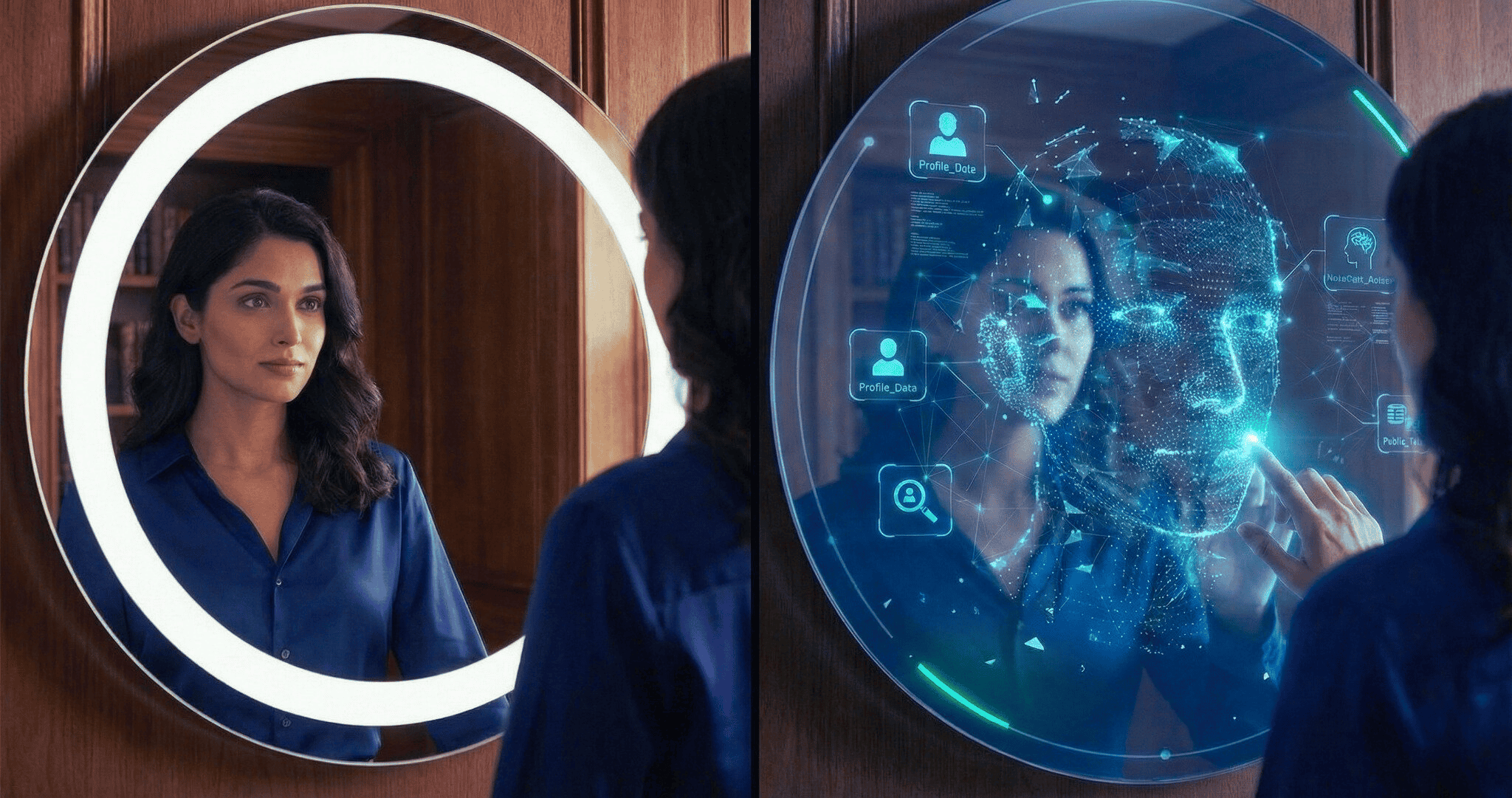
Today’s reality is stranger and more urgent. The algorithms that power our feeds, recommendations, and search results don’t just help us find what we want. They tell us what to want before we know it ourselves. They’re constructing identity in real-time, assembling the self from data exhaust and engagement patterns.
This isn’t about better targeting. It’s about something far more fundamental: we’re watching the machinery of selfhood get rewired.
The Signs Are Everywhere
Look at how fast aesthetics now move. A TikTok trend can explode, peak, and die in less than a week. What used to take years now takes days. These aren’t organic movements bubbling up from subcultures, they’re platform-native phenomena, optimized for the feed.
Consider those pre packaged identity kits that circulate online: “clean girl,” “coastal grandmother,” “dark academia.” These aren’t discovered; they’re served. They come fully formed, complete with shopping lists and Spotify playlists, engineered for maximum algorithmic compatibility. The brands that supply the core visual vocabulary for these bundles become embedded in the identity itself.
Watch how interests mysteriously appear in sync across someone’s entire digital presence. You don’t search for something once and get a single ad. You search for hiking boots and suddenly your entire internet believes you’re an outdoorsy person. Your Instagram shows camping gear, your YouTube suggests trail guides, your Spotify delivers folk music. This isn’t coincidence, it’s coordinated prediction.
Even online communities have transformed. They’re no longer organized around geography or history but around engagement mechanics. The algorithm decides who gets heard, which connections form, which conversations surface. Community structure itself is being designed from above.
The Industry Is Getting It Wrong
Here’s the uncomfortable truth: the prevailing strategy is making things worse.
Most brands are chasing deeper personalization, convinced that more data and tighter targeting always equals better results. They’re wrong on three counts.
First, personalization has a breaking point. Research from the University of Technology Sydney shows that hyper personalization creates diminishing returns after a threshold. Push too far and people start feeling trapped, not understood. Brands racing toward algorithmic perfection are sprinting toward a cliff.
Second, we’re measuring the wrong things. The industry remains obsessed with engagement metrics, clicks, time spent, conversion rates. These numbers look good in quarterly reports while masking a slow-motion disaster: the erosion of consumer autonomy and the collapse of brand differentiation. We’re optimizing what’s easy to measure instead of what actually matters.
Third, brands are borrowing identity instead of building it. When you let the algorithm define your customer and simply cater to that definition, you become interchangeable. You’re accepting a role as a commodity in someone else’s system.
The cost? Market convergence. A thousand brands all hitting the same notes because the data told them to. Everyone looks identical because everyone’s learning from the same feedback loop.
What Actually Works
The way forward requires fundamentally rethinking how brands operate in an algorithmic world.
Stop studying who customers were. Start anticipating who they’re becoming. Amazon, Netflix, and L’Oréal have moved beyond static segments to dynamic prediction systems that spot identity shifts before they show up in purchase behavior. Your data infrastructure should identify pre-conscious patterns, the signals that appear before someone knows what they want.
Build identity ecosystems, not just brand positions. The most sophisticated brands aren’t occupying space in existing markets; they’re creating the architecture for new forms of self-expression. Patagonia’s fanatic loyalty isn’t luck, it’s the result of an identity system competitors literally cannot replicate. Their environmental activism isn’t marketing; it’s operational DNA. When they run campaigns telling people not to buy their products, they’re providing a behavioural script the algorithm can’t synthesize. That’s structural differentiation.
Solve for coherence across fragmentation. As algorithmic personalization accelerates, shared culture splinters into countless micro communities, each with its own understanding of reality. The temptation is to chase every segment. The result is dilution, you become nothing to everyone.
Netflix shows another path. Deeply personalized recommendations, customized thumbnails for different users, tailored content surfacing, yet the brand itself remains crystal clear. That signature “tu-dum” sound means the same thing whether you’re watching Korean thrillers or British baking shows. Personalization and coherence aren’t opposites; they’re both necessary.
Design for discovery, not just reinforcement. Algorithmic systems naturally recurse, narrowing rather than expanding. What starts as helpful suggestion becomes a trap—familiar content endlessly reflected back. Discovery dies. Growth stops.
Spotify hit this wall hard. Critics accused their recommendation engine of creating filter bubbles that locked listeners into algorithmic echo chambers. Instead of doubling down on prediction accuracy, they introduced “Amplify” in 2024, a deliberate disruption of their own patterns to surface underrepresented genres and emerging artists. They call it “strategic serendipity”: using algorithmic power to reintroduce surprise and discovery rather than just serving up more of the same.
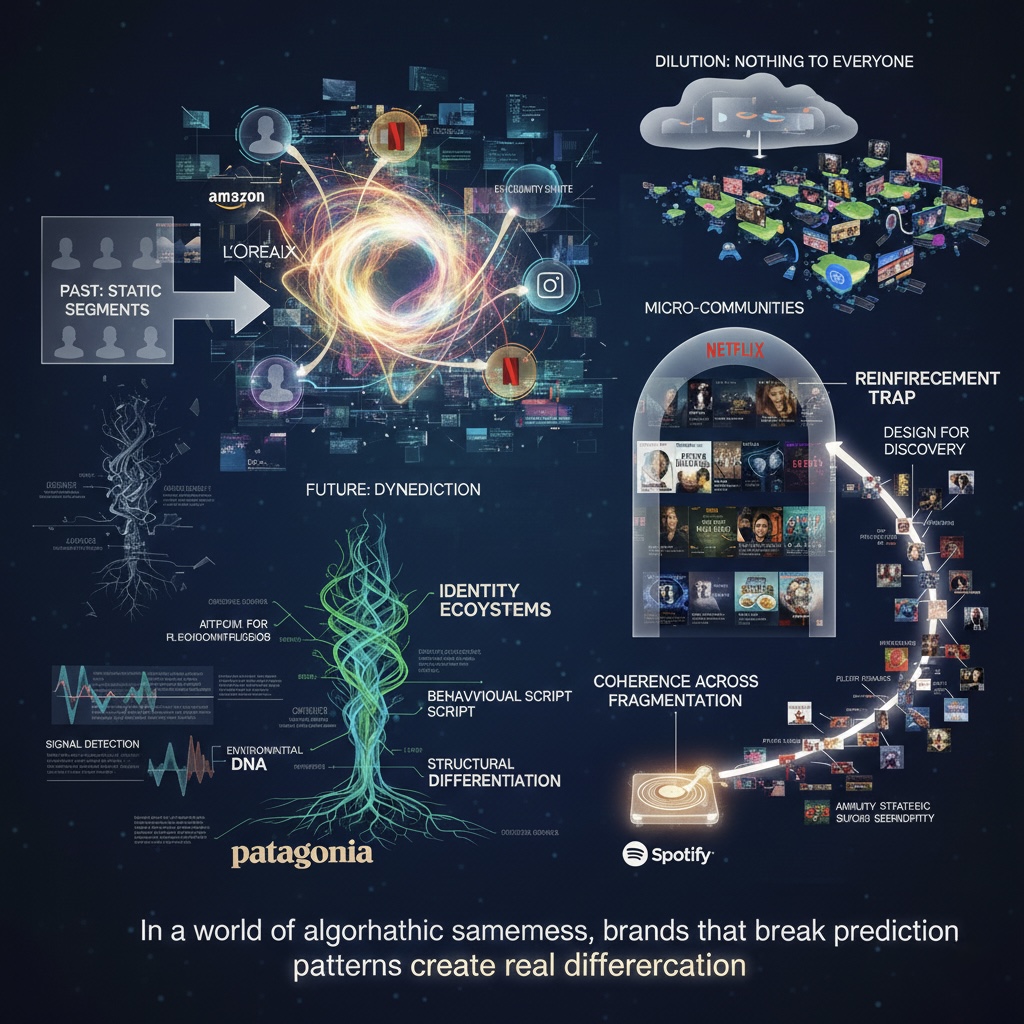
That’s the competitive edge. In a world of algorithmic sameness, brands that break prediction patterns create real differentiation.
The Real Opportunity
Strategic serendipity delivers multiple advantages that traditional algorithmic optimization misses.
You stand out when everyone else looks identical. You build sustainable engagement instead of the diminishing returns that come from visual exhaustion and aesthetic fatigue. You create communities bound by genuine shared passion rather than platform mechanics—communities that can survive outside any single algorithmic system.
Most valuable: you spot emerging trends before they become algorithmic consensus. When you understand how pre-conscious preferences form, you can move early while others wait for the data to tell them what’s already happening.
The Choice Ahead
The question isn’t whether algorithms will shape identity. They already do. The question is whether your brand will be a passive participant in that process or an active architect.
The brands that win won’t reject technological mediation, that ship has sailed. They’ll design for human agency within algorithmic systems. They’ll understand the mechanics while creating space for authentic discovery. They’ll provide the high-fidelity signals these systems need while refusing to optimize away everything that makes them distinctive.
This is both harder and more important than traditional brand strategy. It requires sophisticated understanding of how prediction systems reshape identity formation. It demands willingness to leave short-term engagement metrics on the table in favor of long-term differentiation. It means becoming indispensable to the systems that shape reality while never letting those systems fully define you.
The alternative is becoming one more interchangeable option in an algorithm’s suggestion list, present but forgettable, recommended but never chosen.
Make yourself necessary to the algorithm. Just don’t let it make you irrelevant to humans.
You may also like..