
Messi’s India tour just left us mesmerized, but the game itself is about to change forever.
The ball doesn’t just roll anymore; it thinks.
The FIFA 2026 anthem dropped, and honestly? Those opening line “It’s time for Mexico, Canada, America” gave me the “Waka Waka (This Time for Africa)” vibes. As someone equally interested in football and pop music, I couldn’t resist diving deeper.
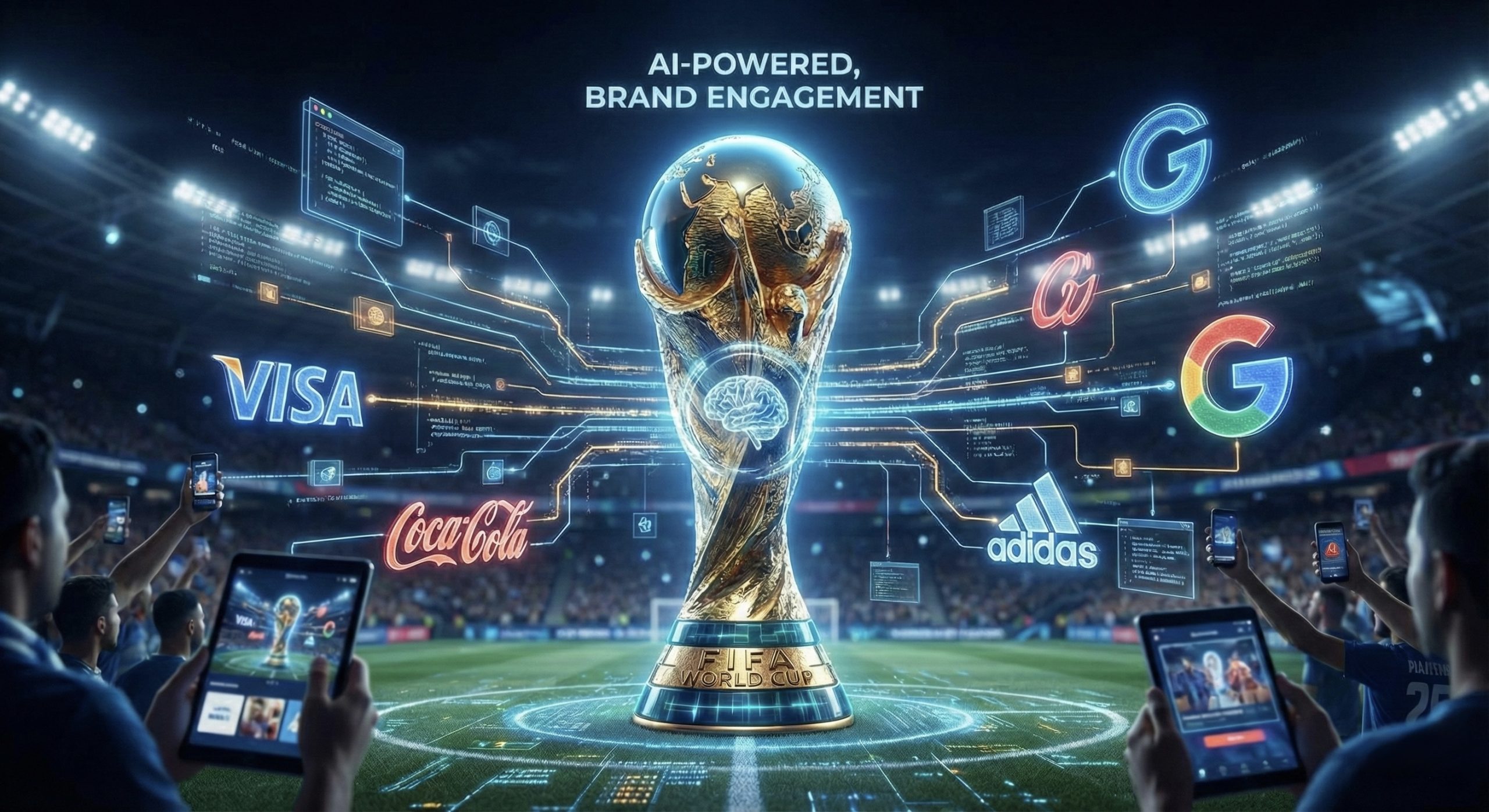
FIFA isn’t just a sports championship. It’s the ultimate playground for brands to champion consumer engagement. As a marketer passionate about music and sports, what I see ahead for 2026 is unprecedented. This World Cup about to fundamentally change how brands connect with audiences. Here is how the “ball game” changes with AI…
The Ball Thinks
”The match ball. Adidas’ Trionda contains a sensor that captures every movement, spin, and touch with scientific precision. A single pass now generates data about everything.”
Previous championships gave us camera angles and commentary. FIFA2026 will give us datasets. For referees, it means clarity. For broadcasters, real-time storytelling. For fans, deeper understanding.
And For brands? FIFA just became a technology platform.
When Algorithms Call Offside
Controversial calls have haunted football forever. VAR helped, but brought delays and new debates. In 2026, AI will change that. The smart ball enables near instant offside detection and precise contact identification. Football’s most emotional moments, goals, controversies, history changing decisions now have algorithms guiding referees.
Here’s what matters for marketers: when sports become more data rich and detailed, new stories emerge. And new stories create opportunities for brands to enter cultural conversations organically.
Broadcasting Gets Personal
Two people can watch the same match and experience completely different versions. One viewer gets beginner friendly commentary. Another receives tactical analysis. Someone on mobile gets vertical highlights. Another sees analytics, probabilities, and predictions. Get ready for Netflix-level personalization applied to live sports.
The disruption for brands? You can now speak differently to different viewers during the same match. The ad I see may not match yours. Brand messages can adapt to browsing behaviour, language, location, even team loyalties.
The World Cup becomes advertising’s most powerful personalization engine.
Stadiums That Sense and Respond
With 48 teams across 16 cities in three countries, this is the most complex World Cup ever. AI will optimize everything crowd management, traffic flow, security, ticketing, operations.
Imagine receiving a congestion-free route to your seat. Personalized food recommendations based on queue lengths. AI predicting fan flow and helping transport systems adapt in real time.
These stadiums won’t just host matches. They’ll sense, think, and respond. The line between physical and digital collapses, unlocking immersive, real world brand storytelling opportunities.
Content at Creator Speed
The most transformative shift happens on social media. AI will explode the volume, speed, and creativity of content. Fans will auto generate highlight reels. Creators will analyze tactics and produce animations within minutes. Media companies will publish multilingual videos instantly. Content becomes a decentralized universe of AI-enhanced stories created by millions.
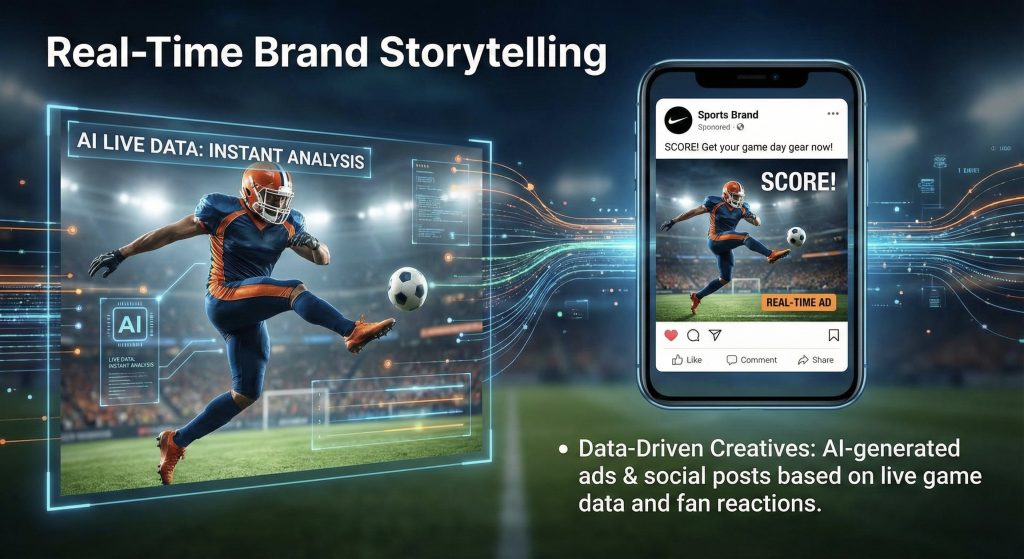
Here’s the advantage: Attention during the World Cup doesn’t belong to FIFA. It belongs to whoever creates the most relevant content fastest. AI gives brands the ability to operate at creator speed, not agency speed.
New Playbook for Brands
Traditional World Cup sponsorship meant buying visibility, logos placements, big budget ads, celebrity endorsements. That model is dead.
In 2026, visibility isn’t bought. It’s captured. Winning brands will merge creativity with AI in ways that mirror how fans experience the tournament:
- Build moment-marketing engines that react instantly to on-pitch events
- Create deeply personalized content adapting to cultures and emotions across countries
- Run predictive campaigns evolving as players rise and fall
- Embed into data visualizations, AR storytelling, AI-powered prediction games
Welcome to the age where sponsorship doesn’t guarantee relevance. But smart execution does.
The question isn’t “How do we appear during the World Cup?” It’s “How do we become part of the fan’s emotional journey?”
When content spreads instantly and AI tells stories faster than humans, the new marketing currency is emotional intelligence (or as I say human intelligence) understanding the fan’s psychological state and responding authentically.
Team eliminated? Console. Player makes history? Celebrate. Controversy strikes? React responsibly. AI can detect emotions, predict reactions, and shape narratives. But brands must humanise.
Brands combining AI intelligence with human empathy will dominate 2026. In 2010, social media went mainstream because. In 2014, mobile viewing exploded. In 2018 and 2022, creators became the new broadcasters. In 2026, AI will be the co-author of culture.
This isn’t just another event. It’s a preview of our future, where sports, technology, and brand stories merge into one ecosystem.
So what is the Brand playbook for FIFA 2026 and beyond?
- Build internal AI creative studios
- Train teams on real-time decision making
- Develop automation that detect match events and generate instant creatives
- Plan localized strategies for key markets
- Identify creator partnerships
- Develop predictive storylines that adapt as the game unfolds
In 2026, speed will beat spends. Relevance will beat reach. Authenticity will beat production value.
The biggest winners will behave like creators, not corporations.
The Story Brands Choose to Write
The 2026 FIFA World Cup will compress technology, culture, sport, and entertainment into one month-long global phenomenon. AI will not replace emotion, it will amplifying it, enriching it, giving it new dimensions. This will be the first World Cup where the ball thinks, the broadcast adapts, the stadium predicts, and fans co creates the story
I’m totally excited to witness this transformation in brand story telling. How about you?